Information
Landmark: Tiznit MosqueCity: Tiznit
Country: Morocco
Continent: Africa
Tiznit Mosque, Tiznit, Morocco, Africa
Overview
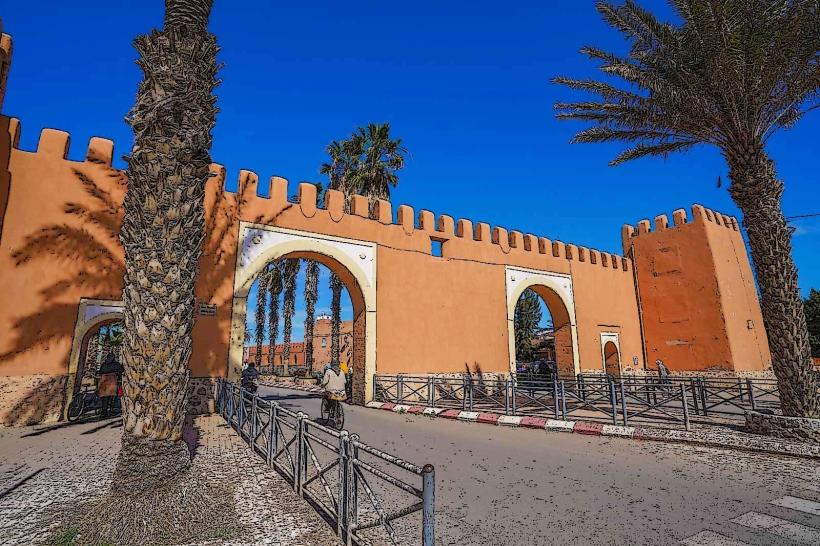
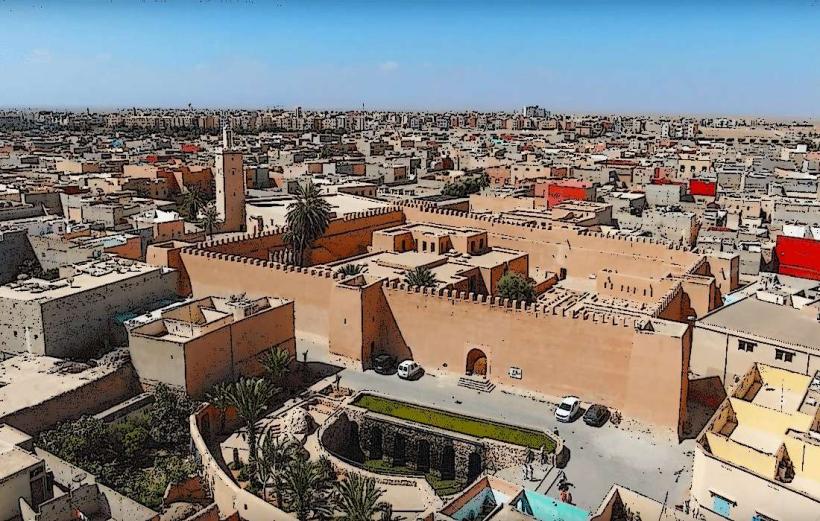
The Tiznit Mosque is a historic religious landmark in the heart of Tiznit, a sun‑baked city in southern Morocco, moreover tiznit may not boast the towering mosques of Fes or Marrakech, but its Great Mosque-جامع تزنيت الكبير-stands at the heart of town, carrying deep cultural meaning and architectural beauty for both Amazigh and Arab residents.The city’s famous for its gleaming silver jewelry, its sturdy stone-walled medina, and the rich Amazigh heritage woven into daily life, as well as let’s take a closer gaze at the Tiznit Mosque and the world around it-stone walls, sun-warmed courtyards, and all: 1.As it happens, In Tiznit, a city in Morocco’s Souss-Massa region, the mosque stands at the heart of the antique medina, encircled by 19th-century earthen ramparts whose sunbaked walls still hold their shape, after that you can reach it easily by strolling through the timeworn town’s narrow, twisting alleys, where the smell of fresh bread drifts from tiny shop doors, fairly Two, also the mosque was built in the 19th century, during Sultan Moulay Hassan I’s reign (1873–1894), a time when he left his mark on southern Morocco by shaping its streets and lifting graceful arches into the skyline, fairly It appears, They built it to strengthen defenses and spread Islam across the region, a move made during a time of tribal unrest and the creeping presence of French forces before colonization, to boot over the years, it’s been more than a venue to pray-it’s hosted lively community gatherings, taught children in its slight religious classrooms, and stood as a proud symbol of Islamic and Amazigh unity.Number three, consequently the Tiznit Mosque embraces the classic Maghrebi style, with a square minaret rising above, stucco walls etched in delicate patterns, graceful horseshoe arches, and warm wooden ceilings over the prayer hall.Made mostly of adobe, stone, and cedar, the building fits seamlessly into the medina’s maze of earthen homes, its warm walls catching the late-afternoon sun, what’s more the square minaret lifts gently above the nearby rooftops, its clean lines and quiet grace catching the afternoon light.It’s often painted in warm earth tones, the same dusty browns and ochres that blend with the city’s heritage stone walls, on top of that the mosque features a modest inner courtyard, or sahn, its stone floor cool underfoot and often framed by graceful arcades-a hallmark of Moroccan mosque design.Inside the prayer hall, rows of sturdy columns rise over reed mats, all aligned toward the qibla wall, where a carved mihrab points the way to Mecca, likewise their plain design mirrors both the practical needs and the quiet, spiritual heart of rural Moroccan mosques, like the cool shade of a whitewashed wall at midday.Number four, meanwhile every Friday, the city’s main mosque fills with worshippers for Jumu’ah prayers, making it the heart of Tiznit’s religious life.Religious Education: Back then, it worked as a madrasa, where local scholars guided students through Qur’an recitation, Islamic law, and the fine points of Arabic grammar-pages rustling softly as lessons unfolded, in turn the mosque serves as a locale for the community to gather-whether for religious celebrations, funerals, or festivals like Mawlid, marking the Prophet Muhammad’s birthday, and the joyous Eid prayers where children run past rows of shining prayer mats.Number five, besides just steps away, the Tiznit Medina stands behind weathered stone walls, alive with silver jewelry workshops, bustling souks, and narrow cobbled lanes that echo with the sound of footsteps.Tiznit’s city walls rank among Morocco’s most striking, running for over five kilometers and punctuated by 36 sturdy towers and nine gates, their weathered stone glowing warm in the late afternoon sun, also jewelry Souq: The mosque sits just a short trek from the jewelry quarter, where artisans hammer out intricate silver patterns inspired by age-classical Amazigh designs.Number six, furthermore visiting Tips - Non-Muslim Access: Like most mosques in Morocco, the prayer halls here are off-limits to non-Muslims, so you’ll need to admire the intricate tilework from the courtyard instead.You can still admire the exterior and its tall minaret from the medina’s narrow streets, and the locals tend to greet tourists with warm, respectful smiles, moreover dress modestly-when you wander through the bustling medina or pause outside a mosque’s gates, locals will appreciate it.Women often keep their shoulders and knees covered, a simple gesture of respect-like pulling a light shawl over bare skin before stepping inside, at the same time photography is usually fine outside the mosque, but if people are close-say, chatting by the gate-it’s polite to ask first.Funny enough, Seven, equally important in conclusion, the Tiznit Mosque may lack the grandeur and ornate carvings of Morocco’s imperial mosques, but it carries a quiet weight of history, graceful architecture, and enduring spiritual significance.If I’m being honest, It’s a proud marker of the community’s identity, carrying centuries of Amazigh-Islamic heritage in a town where the tap of a craftsman’s chisel echoes through narrow streets filled with tradition and steady resolve, as a result a trek through the mosque and its quiet streets immerses you in Morocco’s rural, southern Islamic heritage-an intimate side of the culture many travelers never observe, where the scent of fresh bread drifts from tiny courtyard ovens.
Author: Tourist Landmarks
Date: 2025-09-26